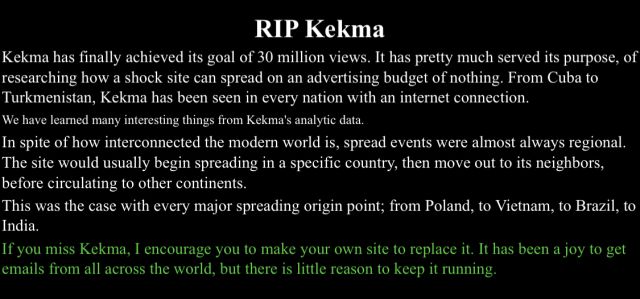
Kekma.net: The Infamous Bait-and-Switch Shock Site Explained
What happens when you click a link promising a funny meme or a free game, only to be confronted with something deeply disturbing? For many unsuspecting internet users, that moment of shock is tied to a single name: kekma.net. This website has carved a notorious niche in online culture, not for its content, but for the visceral, often traumatic reactions it provokes. But what exactly is kekma.net, why does it persist, and what does its existence tell us about the darker corners of the web? This comprehensive guide unpacks the history, mechanics, and profound implications of one of the internet's most infamous bait-and-switch shock sites.
What Is Kekma.net? Decoding the Bait-and-Switch
At its core, kekma.net (formerly operating at the kekma.ga domain) is a classic example of a "bait-and-switch" shock site. Launched on April 23rd, 2019, its entire premise is built on deception. The site is typically promoted across platforms like TikTok, Discord, and gaming forums with enticing thumbnails or text promising something benign or desirable—such as "free GTA 5," "Big Chungus" videos, or "the best meme culture" delivered to your inbox. The promise is a hook designed to bypass a user's natural caution.
When an unsuspecting person clicks the link, they are not taken to the promised content. Instead, they are instantly redirected to the shock page. This page usually features a sudden, jarring combination of loud, distorted audio (often a scream or aggressive music) and a graphic, disturbing, or sexually explicit image or video. The switch from anticipated humor or utility to traumatic content is instantaneous and intentional, designed to maximize startle and distress. The experience is not meant to be viewed; it's meant to be endured by its victims.
The site's tagline, sometimes seen in promotional blurbs, reads: "a dire message from the kekma krew." This cryptic phrase hints at the misogynistic and edgelord culture that often surrounds such shock sites, framing the trauma inflicted as a twisted form of "message" or "joke" from its creators.
The Creator: Obok Meatgod and the Anonymity of Shock
The individual behind kekma.net is known by the screen name obok meatgod. On the Screamer Wiki—a dedicated encyclopedia for shock content—he is also listed as kekmaguy. This duality of names is common in the shock site and "screamer" community, where creators often operate under multiple aliases across different platforms.
Very little personal information about obok meatgod is publicly available, which is typical for operators of such sites. They rely on anonymity to avoid legal repercussions, platform bans, and public backlash. His activity is primarily confined to the shadowy ecosystems where shock content is archiving, discussed, and shared. The creation of kekma.net fits a pattern: a technically simple website (often just a single HTML page with embedded media) built for one purpose—to shock the maximum number of people with minimal effort. The "krew" mentioned in the site's messaging suggests a small, collaborative group, but obok meatgod remains the central, identified figure.
The Spectrum of Reactions: From "Not the Worst" to Traumatized
Reactions to encountering kekma.net exist on a wide spectrum, and this divide is a critical part of its story. On one end, some internet veterans, particularly those familiar with the long history of shock sites like Goatse, 2 Girls 1 Cup, or Meatspin, dismiss kekma.net as "not the worst they have seen." To them, it's a predictable, low-effort entry in a genre that peaked in the early 2000s.
On the other end, and this is the far more common and significant group, are those who are genuinely shocked and traumatized. For a younger generation raised on more curated, algorithmically-safe social media feeds (like TikTok's "For You" page), an unmarked, high-intensity shock is a jarring violation. The unexpected nature of the attack—the bait-and-switch—amplifies the psychological impact. Users report symptoms ranging from acute anxiety, nausea, and insomnia to lingering intrusive thoughts and a heightened sense of online paranoia. The trauma is real for many, and the site's continued circulation is seen as a direct threat to mental well-being, especially for adolescents who are its primary targets via social media promotions.
The Viral Engine: Kekma.ga, TikTok, and the Quest for Views
The lifeblood of kekma.net is its viral propagation, primarily through TikTok. The key sentence fragment—"kekma.ga what is it tiktok reaction / что такое кекма га"—captures this perfectly. The site's name and link become a viral challenge or "prank" trend.
Users, often teenagers, film their "before and after" reactions to clicking the link. A prime example is the TikTok video from user @lilbabylex1579 titled "Here's my moms before and after reaction to kekma.net 🤣." These reaction videos serve multiple purposes:
- Social Proof & Curiosity: They confirm the link's notoriety and pique curiosity ("What could be so bad?").
- Performance: The creator performs shock for an audience, turning personal distress into social currency (likes, views, comments).
- Normalization: By framing it as a "prank" or a laugh, the harmful nature of the bait-and-switch is downplayed.
Other promotional blurbs—"kima ga kekma.ga big chungus views" or "kekma.ga free gta 5"—are classic clickbait, co-opting popular meme formats (Big Chungus) and desirable offers (free games) to ensnare victims. The phrase "get all the best meme culture right in your inbox" is a particularly cruel irony, promising wholesome content while delivering the opposite.
Beyond the Shock: Ethical, Legal, and Cultural Implications
Understanding kekma.net transcends a mere examination of its content. It necessitates a broader consideration of the ethical, legal, and cultural implications of such platforms.
- Ethical: The site is a profound violation of consent. There is no warning, no age gate, no opportunity for the user to opt-in. It weaponizes trust and curiosity to inflict psychological harm for the creator's amusement or notoriety. It raises questions about the ethics of "pranks" that cause lasting distress.
- Legal: The legal status is murky but concerning. While the content itself may not always be illegal (depending on jurisdiction and specific material), the deceptive practices could potentially fall under laws regarding phishing, computer fraud, or intentional infliction of emotional distress. The Online sandbox report for kekma.net, tagged as phishing, verdict highlights this. Security tools and browsers often flag the domain as malicious or deceptive, not necessarily for the shock content, but for its bait-and-switch methodology, which is a form of social engineering.
- Cultural: Kekma.net is a symptom of a persistent "edgelord" subculture that finds value in transgression and causing offense. Its circulation on mainstream platforms like TikTok shows the constant friction between open platforms and harmful content. It also reflects a desensitization cycle; what shocks one generation may be mundane to the next, pushing creators to ever more extreme bait to achieve the same reaction.
The Ecosystem: Screamer Wiki and Archiving the Shocked
A crucial part of kekma.net's world is the Screamer Wiki. This is a website that collects and documents information about screamers, shock sites, and videos that use sudden loud noises or disturbing images to scare or shock users. It functions as an encyclopedia and archive for this niche genre.
On the Screamer Wiki, one can learn about the history, types, and examples of screamers, and how to archive and edit them. Kekma.net has its own entry, detailing its launch date, creator (obok meatgod/kekmaguy), and typical content. This archiving serves two purposes: it preserves the history of internet shock culture for researchers and enthusiasts, and it acts as a warning system. By documenting these sites, the wiki informs users what to avoid. However, it also inevitably provides a roadmap for those seeking out such content, creating a paradoxical effect of both warning and enabling.
Is Kekma.net Legit or a Scam? A Technical Analysis
The question "Is kekma.net legit or a scam?" requires a clear answer from a safety perspective: it is a malicious deception, functionally a scam of attention and mental well-being.
- Legitimacy: It offers nothing of value. The promised "free GTA 5," "meme culture," or "adventures" are non-existent. It is not a legitimate service, game portal, or meme aggregator.
- Scam Aspect: The entire model is a bait-and-switch scam. You are scammed out of your expectation of safe, entertaining content and instead subjected to an unwanted, harmful experience. Your click generates ad revenue or notoriety for the creator at your expense.
- Technical Analysis: Sites like Zedload.com (mentioned in the key sentences as a download portal) are often used as secondary vectors, hosting the malicious link disguised as a software download. The key sentence notes Zedload has "565,058 full downloads" across software, movies, games, etc. This illustrates how shock links are parasitic, hitching rides on legitimate-seeming download sites to reach wider audiences.
- Trustworthiness: Any site that immediately redirects you to a shocking image/video after clicking a link from an unverified source (TikTok comment, Discord DM, forum post) is fraudulent and untrustworthy. Browser security extensions and Google's Safe Browsing typically flag such domains quickly.
The Allure and The Illusion: "Epic Adventures" and "Visual Storytelling"
Some promotional text for kekma.net, likely from its own SEO spam or fan edits, uses wildly contrasting language: "Kekma net uncover epic adventures, kekma net fascinating characters, and enthralling kekma net storylines" and "Dive into a realm of visual storytelling like youve never experienced kekma net."
This is pure, calculated irony. It frames the traumatic shock as a form of intense, engaging narrative—an "adventure" or "storytelling." This reframing is a psychological trick used by the community to normalize the experience and recruit new participants. It co-opts the language of entertainment and art to mask an act of digital harassment. There are no epic adventures or fascinating characters on kekma.net, only a single, static page of intended trauma. The "visual storytelling" is the story of the victim's own shock, told without their consent.
Protecting Yourself: Recognizing and Avoiding Bait-and-Switch Shock Sites
Given the persistent nature of these links, proactive protection is essential. Here is actionable advice:
- Hover Before You Click: On desktop, hover your mouse over any link to see the true URL in the status bar. If it's a random domain like
kekma.ga,kekma.net, or a misspelling of a popular site, do not click. - Be Skeptical of "Too Good to Be True" Links: Offers of "free GTA 5," "unlocked games," or "exclusive memes" via obscure links are almost always scams or traps.
- Check Link Sources: Links from TikTok video comments, anonymous Discord messages, or unfamiliar forum posts are high-risk. Trust links from official, verified accounts of companies or creators.
- Use Security Tools: Install reputable browser extensions that flag malicious and deceptive sites. Enable Google Safe Browsing.
- Know the Signs of a Screamer Page: If a link promises one thing and the page loads instantly with a full-screen image/video and loud, automatic audio, close the tab immediately. Do not interact with the page.
- For Parents: Have open conversations with teens about online stranger danger extending to links and "prank" culture. Teach them that clicking unknown links has real psychological risks.
- If You're Exposed: If you or someone you know is shocked by such content, close the tab immediately. Use browser history to avoid the site. Talk about the experience. If distress persists, seek support from a trusted adult or mental health professional. Remember, the fault lies entirely with the creator of the trap, not the victim.
The Kekma.net Phenomenon in Context: A Brief History of Shock Sites
Over the years, the internet has seen its fair share of websites intended to shock, provoke and, in some cases, traumatize their visitors. Among these, kekma.net stands out for its fame (or infamy). To understand its place, a quick history is helpful:
- Early Era (Late 90s - Mid 2000s): Sites like Goatse.cx, 2 Girls 1 Cup, and Meatspin defined the genre. They were often static pages with gross-out or sexual content, shared via email and early forums.
- The "Screamer" Era (Mid 2000s - 2010s): Focus shifted to videos with sudden loud noises (screams, horns) paired with scary faces or monsters, often disguised as normal videos. This is the domain of the Screamer Wiki.
- The Bait-and-Switch Era (2010s - Present): Kekma.net represents the modern evolution. It combines the shock of screamers with the deceptive, viral marketing tactics of the social media age. The "bait" is tailored to platform-specific trends (TikTok memes, free game scams), making it more effective at bypassing user skepticism.
Kekma.net is not innovative in content but in its distribution model. It exploits the algorithmic and social dynamics of platforms like TikTok to achieve mass-scale, targeted victimization.
Conclusion: More Than Just a Shock Site
This article explains kekma.net, including related terms like kekma, kekma ga, and kekma.ga link, in clear and simple language. The goal is to help readers understand what it is, why it circulates online, and how to protect themselves from unwanted exposure.
Kekma.net is a digital parasite. It feeds on curiosity, trust, and the innate human desire for entertainment or gain. Its simplicity is its weapon—a single, deceptive page capable of causing real harm. Its existence forces us to confront uncomfortable questions about consent, platform responsibility, and the ethics of online "pranks."
While some may dismiss it as an inevitable, if unpleasant, part of internet lore, the trauma reported by its victims demands a more serious response. It highlights the need for digital literacy education that goes beyond privacy settings to include psychological safety. It challenges platforms to more aggressively police deceptive links that lead to harmful content.
Ultimately, kekma.net is a mirror reflecting a strand of internet culture that finds power in violation. Recognizing it, understanding its mechanisms, and taking steps to avoid it are crucial for navigating the modern web safely. The best defense is an informed, skeptical, and cautious approach to the countless links that promise a laugh, a game, or a meme. If it seems too easy or too enticing from an unverified source, it almost certainly is—and the switch may be more shocking than you can imagine.